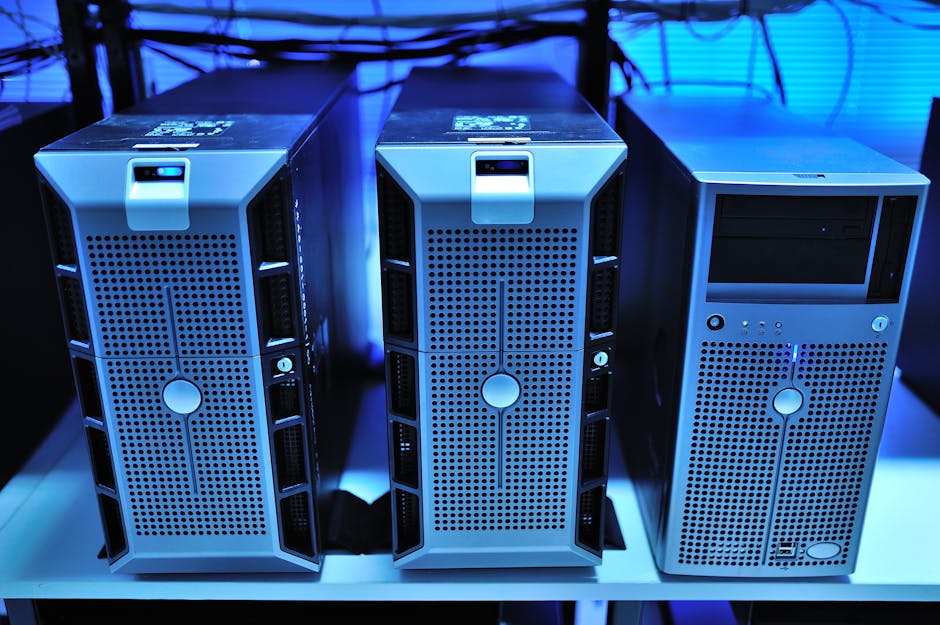
Energy Management System Architecture
Rising energy costs and grid volatility make well-designed EMS a competitive advantage and an operational necessity

Energy is no longer a background utility. Between volatile wholesale markets, distributed solar, batteries on site, and demand response programs, energy has become a live system that developers need to observe, control, and optimize. If you have ever stared at an SCADA screen while a grid event nudged your site into a demand response event, you know the feeling. The numbers move fast. The decisions matter. The architecture behind an Energy Management System is what turns raw telemetry into reliable control and real savings.
I have built and integrated EMS components for commercial facilities and light industrial sites. Nothing glamorous, just real constraints: flaky ModbusTCP connections, vendor-specific protocols, tight latency budgets for load shedding, and compliance that demands audit trails. The goal of this post is to share a practical blueprint that works under real constraints. We will walk through the architecture, patterns, and code that you can adapt to your context. We will avoid vendor fairy tales and focus on what you actually have to ship to run energy safely and efficiently.
Context: Where EMS lives today and who uses it
An Energy Management System, in modern practice, is a layered platform that connects to meters, inverters, batteries, HVAC, and building management systems to collect data, apply control logic, and coordinate with programs like demand response. It sits across operational technology (OT) and information technology (IT). It feeds analytics, dashboards, and sometimes market platforms or virtual power plant (VPP) aggregators.
If you look at the landscape, you will see the International Electrotechnical Commission (IEC) standards like IEC 61850 for substations, IEC 60870-5-104 for telecontrol, and IEC 62351 for security. You will also see sunsetting protocols like DNP3 and newer options like MQTT Sparkplug. Building systems often talk via BACnet. Vendors push proprietary SDKs and clouds. The real world is a mix. Most teams choose a runtime like Node-RED for rapid integration of OT, or Go/Python for robust services. Node-RED is strong for protocol bridging and quick dashboards. Go is strong for concurrent, reliable ingestion and control. Python shines for analytics and ML-backed optimization.
Compared to generic IoT platforms, an EMS is stricter about determinism and safety. You need guaranteed delivery, offline operation, and fail-safe behaviors. Compared to pure SCADA, modern EMS leans on event-driven microservices and cloud-scale analytics. Many orgs use Node-RED at the edge for protocol translation, publish to an MQTT broker, and consume in Python/Go services for control and storage. This hybrid covers both speed and flexibility.
Common users today:
- Facility engineers who need to cut peak demand.
- Sustainability teams tracking carbon and renewables.
- Developers building control apps for DERs and EV charging.
- Integrators stitching together multi-vendor stacks.
- Aggregators who need site-level telemetry for VPP programs.
Core EMS concepts: Data, control, and coordination
An effective EMS architecture is an event-driven system with clear boundaries. You will usually find three zones:
- Edge: protocol translation, local control, and buffering.
- Core: event routing, state management, scheduling, and persistence.
- Cloud/Analytics: dashboards, reporting, forecasting, and program integration.
These zones communicate via a message bus, usually MQTT. At the edge, a runtime like Node-RED ingests Modbus, BACnet, or OPC UA, normalizes data, and publishes typed telemetry. The core services subscribe, update a state store, run control loops, and write to a historian. The cloud layer consumes selected topics for user-facing features.
The key abstractions:
- Points: typed signals (power, temperature, setpoint) with units and timestamps.
- Assets: devices (meter, battery, inverter, chiller) with identity and metadata.
- Controls: commands with guardrails (min/max, ramp rates, interlocks).
- Schedules: time windows for setpoints or load targets.
- Programs: demand response, price response, or carbon targets.
Safety is built around guardrails and interlocks. For example, a discharge command to a battery must check state of charge, temperature, and fault flags. A load shed command must respect non-critical loads and fallback modes. The architecture supports dry-run and simulation modes for testing.
A simple conceptual flow:
# Pseudo event flow in Python-like pseudocode
# From edge -> core -> control
# Real implementations use MQTT topics and structured payloads
# This is for illustrating the mental model

on_telemetry("site/meter/power", payload):
    state.update(payload)
    control_loop(state)

def control_loop(state):
    if state.demand > state.target:
        shed = state.demand - state.target
        actions = scheduler.plan(shed, state)
        for act in actions:
            publish_command(act.target, act.value)
In production, we split this into services: ingestion, state, control, scheduling, and command. Each service is small, testable, and independently deployable.
Architecture blueprint: A practical stack
Below is a practical blueprint that you can tailor. It assumes an edge node (e.g., industrial PC or Raspberry Pi) on site, a central broker, and a set of microservices. We favor open standards and portable tools.
Edge layer: Node-RED or custom gateway
Node-RED is a common choice for protocol translation because it has Modbus, BACnet, and OPC UA nodes. It can normalize data into a JSON schema and publish to MQTT. You can also write a small Go service if you need stricter performance or custom drivers.
Example Node-RED flow structure (export snippet):
[
  {
    "id": "modbus-meter",
    "type": "modbus-client",
    "name": "SiteMeter",
    "host": "10.0.1.5",
    "port": 502,
    "unitid": 1
  },
  {
    "id": "modbus-read",
    "type": "modbus-read",
    "name": "Read Power",
    "topic": "site/meter/power",
    "dataType": "int16",
    "register": 40001
  },
  {
    "id": "mqtt-out",
    "type": "mqtt out",
    "name": "MQTT Publish",
    "topic": "site/meter/power",
    "qos": "1",
    "retain": "false"
  }
]
In a real project, you would also add normalization nodes to convert raw registers to engineering units, add timestamps, and mark quality flags. If you prefer Go, the pattern is similar:
// Minimal Go Modbus reader publishing to MQTT
package main

import (
    "encoding/json"
    "fmt"
    "log"
    "time"
    "github.com/goburrow/modbus"
    "github.com/eclipse/paho.mqtt.golang"
)

type Telemetry struct {
    Name  string  `json:"name"`
    Value float64 `json:"value"`
    Unit  string  `json:"unit"`
    Ts    int64   `json:"ts"`
}

func main() {
    // Modbus TCP client
    handler := modbus.NewTCPClientHandler("10.0.1.5:502")
    handler.Timeout = 2 * time.Second
    handler.SlaveId = 1
    client := modbus.NewClient(handler)

    // MQTT client
    opts := mqtt.NewClientOptions().AddBroker("tcp://broker.local:1883")
    c := mqtt.NewClient(opts)
    if token := c.Connect(); token.Wait() && token.Error() != nil {
        log.Fatal(token.Error())
    }

    // Read holding register 40001 and publish
    for {
        results, err := client.ReadHoldingRegisters(40001, 1)
        if err != nil {
            log.Println("modbus error:", err)
            time.Sleep(5 * time.Second)
            continue
        }
        // Assuming raw register holds kW scaled by 10
        raw := uint16(results[0])<<8 | uint16(results[1])
        value := float64(raw) / 10.0

        tel := Telemetry{Name: "site_meter_power", Value: value, Unit: "kW", Ts: time.Now().Unix()}
        payload, _ := json.Marshal(tel)
        c.Publish("site/meter/power", 1, false, payload)

        time.Sleep(1 * time.Second)
    }
}
Message bus: MQTT with Sparkplug (optional)
MQTT is the backbone. Use QoS 1 for reliable delivery, QoS 2 where you need exactly-once semantics for critical commands. Topic structure should be consistent:
- telemetry/site/+/power
- telemetry/site/+/voltage
- command/site/+/setpoint
- event/site/+/alarm
Sparkplug adds a namespace and state management (birth, death certificates). If you integrate with VPP aggregators, Sparkplug makes device state explicit. If you run simple, plain JSON payloads with metadata are fine.
Ingestion and state: Python or Go microservices
We write a small service that subscribes to telemetry, validates schema, and writes to a time-series store. It also updates an in-memory state cache for control logic.
Python example (using fastapi and paho for MQTT):
# File: ingestion/ingest.py
import json
import asyncio
from datetime import datetime
from typing import Dict, Any
import paho.mqtt.client as mqtt
from pydantic import BaseModel, Field

class Telemetry(BaseModel):
    name: str
    value: float
    unit: str
    ts: int = Field(default_factory=lambda: int(datetime.utcnow().timestamp()))

# In-memory state cache
state: Dict[str, Telemetry] = {}

def on_connect(client, userdata, flags, rc):
    print(f"Connected with result code {rc}")
    client.subscribe("site/+/telemetry/#")

def on_message(client, userdata, msg):
    try:
        payload = json.loads(msg.payload.decode())
        tel = Telemetry(**payload)
        state[tel.name] = tel
        print(f"Updated state: {tel.name} = {tel.value} {tel.unit} at {tel.ts}")
    except Exception as e:
        print(f"Failed to parse {msg.topic}: {e}")

client = mqtt.Client()
client.on_connect = on_connect
client.on_message = on_message
client.connect("broker.local", 1883, 60)
client.loop_forever()
This service persists data to InfluxDB or TimescaleDB. It can also publish derived events (e.g., rolling 15-minute demand).
Control and scheduling: Separate service with rules
A control service subscribes to state changes, checks constraints, and publishes commands. Use a rules engine if the logic gets complex. The simplest robust pattern is a deterministic scheduler that plans actions based on setpoints and prices.
Example scheduling logic:
# File: control/scheduler.py
from datetime import datetime, timedelta
from dataclasses import dataclass
from typing import List

@dataclass
class Action:
    target: str
    value: float
    start: datetime
    reason: str

def plan_shed(demand: float, target: float, assets: List[dict]) -> List[Action]:
    # naive plan: shed non-critical loads and reduce battery charge
    excess = max(0.0, demand - target)
    actions = []
    for a in assets:
        if a["type"] == "load" and a["priority"] == "noncritical" and a["status"] == "on":
            amount = min(excess, a["max_shed"])
            actions.append(Action(target=a["id"], value=0.0, start=datetime.utcnow(), reason=f"shed {amount}kW"))
            excess -= amount
        if a["type"] == "battery" and excess > 0:
            # reduce charge rate to save import
            new_rate = max(a["charge_rate"] - 5.0, 0.0)
            actions.append(Action(target=a["id"], value=new_rate, start=datetime.utcnow(), reason="reduce charge"))
    return actions
Guardrails matter: never exceed asset limits, respect ramp rates, and implement interlocks (e.g., do not discharge battery while maintenance flag is set). For reliability, use a command acknowledgment pattern: publish a command, listen for an ack from the device, and time out if no ack.
Persistence and analytics
Time-series storage is a must. InfluxDB and TimescaleDB are common choices. InfluxDB is optimized for high write rates and simple queries for telemetry. TimescaleDB gives you full SQL and extensions for analytics. If you want to keep it simple, start with SQLite on the edge for buffering and replicate to Postgres/Timescale in the cloud.
Visualization with Grafana is straightforward. For energy, you often want real-time power, daily energy totals, and demand peaks. A common dashboard setup shows:
- Current demand vs target.
- Battery state of charge and power.
- Price signals and DR status.
- Asset health alarms.
Real-world patterns and workflows
Onboarding a new device
When a new device arrives, you want a repeatable onboarding workflow:
- Identify protocol and register map.
- Define a telemetry schema for that asset.
- Create a Node-RED flow or Go driver.
- Publish birth message (if using Sparkplug) or initial metadata.
- Validate data quality and units.
- Add to control rules if relevant.
Folder structure for a simple project:
ems-project/
├─ edge/
│  ├─ flows.json         # Node-RED flows export
│  ├─ drivers/           # custom drivers
│  ├─ config/            # device register maps
├─ services/
│  ├─ ingestion/
│  │  ├─ ingest.py
│  │  ├─ Dockerfile
│  ├─ control/
│  │  ├─ scheduler.py
│  │  ├─ rules.py
│  │  ├─ Dockerfile
│  ├─ analytics/
│  │  ├─ queries.sql
├─ docker-compose.yml
├─ mqtt-topics.md
Handling unreliable networks
Sites often have spotty connectivity. Buffering is essential:
- Edge node buffers outgoing messages locally (disk or SQLite).
- On reconnect, publish with retain flag for critical state.
- Implement session persistence on MQTT clients.
- Use store-and-forward patterns for telemetry.
Demand response integration
You will likely join a DR program. The aggregator sends price or curtailment signals. Your system must:
- Ingest the signal (API or MQTT).
- Translate to a set of allowed actions.
- Plan and schedule actions.
- Publish commands and report compliance.
- Confirm event completion and log.
Example DR event handler:
# File: control/dr_handler.py
import json
import paho.mqtt.client as mqtt

def handle_dr_event(payload: bytes):
    evt = json.loads(payload)
    # Example payload: {"event_id": "dr-123", "start": "2025-10-20T17:00:00Z", "duration_min": 60, "target_kW": 200}
    print(f"Scheduling DR {evt['event_id']} for {evt['duration_min']} min, target {evt['target_kW']} kW")
    # Save to scheduling queue and let the scheduler plan

client = mqtt.Client()
client.on_message = lambda c, u, m: handle_dr_event(m.payload) if m.topic == "program/dr/event" else None
client.connect("broker.local", 1883)
client.subscribe("program/dr/event")
client.loop_forever()
Security and safety
Security is non-negotiable:
- Use TLS for MQTT, client certs for device auth.
- Principle of least privilege: each service gets its own credentials and topic ACLs.
- Encrypt at rest for stored telemetry.
- Separate OT and IT networks via firewalls and VLANs.
Safety checks should be explicit in code:
def guard_battery_command(soc: float, temp: float, fault: bool, cmd: dict) -> bool:
    if fault:
        return False
    if soc < 10 and cmd.get("mode") == "discharge":
        return False
    if temp > 55:
        return False
    return True
Observability and alarm management
Define alarm priorities and deduplication rules. Use structured logging. Emit metrics like publish rate, command success rate, and rule evaluation latency. A simple health endpoint per service helps. For example:
# File: services/ingestion/health.py
from fastapi import FastAPI
import psutil

app = FastAPI()

@app.get("/health")
def health():
    return {
        "status": "ok",
        "cpu_percent": psutil.cpu_percent(),
        "memory_mb": psutil.virtual_memory().used // (1024 * 1024),
        "state_items": len(state)
    }
Honest evaluation: Strengths, weaknesses, and tradeoffs
Strengths:
- Event-driven architecture with MQTT enables reliable, decoupled services.
- Node-RED reduces time to integrate new protocols.
- Python/Go provide flexibility for control and analytics.
- Time-series databases make reporting and dashboards easy.
- Open standards allow portability across vendors.
Weaknesses:
- Protocol fragmentation and vendor lock-in remain common.
- Running a message bus and multiple services adds operational overhead.
- Safety and compliance require rigorous testing and documentation.
- Edge hardware constraints may limit heavy analytics at the site.
When to use:
- Multi-vendor environments with diverse protocols.
- Demand response or VPP participation.
- Sites needing real-time control and historical analytics.
- Teams comfortable with microservices and MQTT.
When to avoid:
- Very small sites with a single device and no need for automation.
- Safety-critical control without proper testing and interlocks.
- Highly regulated environments without vendor certifications and support.
Tradeoffs:
- Node-RED is fast but not ideal for hard real-time control; consider a custom service for latency-critical tasks.
- Cloud analytics is powerful, but offline operation at the edge is safer for local control.
- MQTT is flexible; enforce schemas to avoid chaos.
Personal experience: Lessons from the field
In my projects, the biggest wins came from standardizing payload schemas and topics early. Without that, you end up with a mess of ad hoc formats and brittle parsers. I learned to define a simple JSON schema with name, value, unit, and timestamp, and stick to it. This small discipline saves weeks of debugging.
I also learned to treat commands as conversations. Publish a command, expect an ack, and log the result. One site had a battery that silently ignored setpoints during a firmware update. The lack of acks led to missed demand reduction. After adding ack handling and timeouts, the problem became visible and we added a fallback rule to switch to HVAC load shedding.
Another common mistake: over-optimizing early. The first version should log everything and implement only the simplest control rule (e.g., shed non-critical loads when demand exceeds target). Once the data proves the concept, add scheduling and price response.
Moments where the architecture paid off:
- A grid event triggered DR; the system automatically reduced load and reported compliance without human intervention.
- A Modbus register change caused a spike; validation in the ingestion service caught the bad data and raised an alarm instead of triggering false shedding.
- Using MQTT retain on critical state allowed a new edge node to recover after reboot and resume control without manual steps.
Getting started: Tooling and workflow
You can start small and expand. The mental model is:
- Ingest: turn device protocols into events.
- Normalize: standardize payloads and units.
- State: keep a live cache and persist telemetry.
- Control: evaluate rules and plans.
- Command: send actions with guardrails and acks.
- Observe: dashboards, logs, and metrics.
Suggested tooling:
- Node-RED for edge integration.
- MQTT broker (Mosquitto or EMQX).
- Python with FastAPI/Paho for services.
- InfluxDB or TimescaleDB for storage.
- Grafana for dashboards.
- Docker Compose for local dev and deployment.
Project workflow:
- Sketch your assets and points list.
- Define topics and payload schema.
- Stand up the broker and Node-RED.
- Add one device, publish telemetry, confirm ingestion.
- Build a simple rule to control one asset.
- Add persistence and a dashboard.
- Test failover and offline behavior.
- Integrate DR or pricing signals.
Example docker-compose.yml to orchestrate:
version: "3.8"
services:
  broker:
    image: eclipse-mosquitto:2
    ports:
      - "1883:1883"
    volumes:
      - ./mosquitto.conf:/mosquitto/config/mosquitto.conf

  influxdb:
    image: influxdb:2.7
    ports:
      - "8086:8086"
    environment:
      - DOCKER_INFLUXDB_INIT_MODE=setup
      - DOCKER_INFLUXDB_INIT_USERNAME=admin
      - DOCKER_INFLUXDB_INIT_PASSWORD=secret
      - DOCKER_INFLUXDB_INIT_ORG=ems
      - DOCKER_INFLUXDB_INIT_BUCKET=telemetry

  grafana:
    image: grafana/grafana:10.0
    ports:
      - "3000:3000"
    environment:
      - GF_SECURITY_ADMIN_PASSWORD=admin

  ingestion:
    build: ./services/ingestion
    depends_on:
      - broker
      - influxdb
    restart: unless-stopped

  control:
    build: ./services/control
    depends_on:
      - broker
    restart: unless-stopped
For the broker, a minimal mosquitto.conf:
listener 1883
allow_anonymous false
password_file /mosquitto/config/passwd
# For production, add TLS and ACLs
What makes this stack stand out:
- Developer experience: clear separation of concerns makes it easy to test and maintain.
- Ecosystem: MQTT tooling is rich (MQTT Explorer for debugging).
- Maintainability: schemas and microservices keep complexity bounded.
- Real outcomes: faster DR response, fewer missed peaks, cleaner audits.
Free learning resources
- IEC 61850 overview: https://www.iec.ch/standards
- DNP3 specification: https://www.dnp.org/About/Pages/AboutDNP3.aspx
- MQTT v5.0 specification: https://docs.oasis-open.org/mqtt/mqtt/v5.0/mqtt-v5.0.html
- Node-RED documentation: https://nodered.org/docs/
- BACnet introduction: https://www.bacnetinternational.org/bacnet
- InfluxDB documentation: https://docs.influxdata.com/influxdb/
- Grafana documentation: https://grafana.com/docs/grafana/latest/
These resources will help you dig into protocols and tools when you need to go deeper. For code, the best teacher is a small pilot on a workbench with a Modbus simulator or a battery emulator.
Conclusion: Who should use this approach
This architecture is a fit if you:
- Manage multiple energy assets across a site or portfolio.
- Participate in demand response or need price response.
- Want reliable, auditable control with observability.
- Have a mix of protocols and vendors.
You might skip or simplify if you:
- Have a single device with basic logging needs.
- Lack network security controls and cannot separate OT/IT.
- Require certified, vendor-supported solutions for strict compliance.
The takeaway: energy management is a software problem with safety constraints. Treat it like a distributed, event-driven system. Standardize early, build guardrails, and iterate from data. The stack above has helped me turn messy telemetry into confident control. If you start with one device and one rule, you will already be ahead of the next grid event.