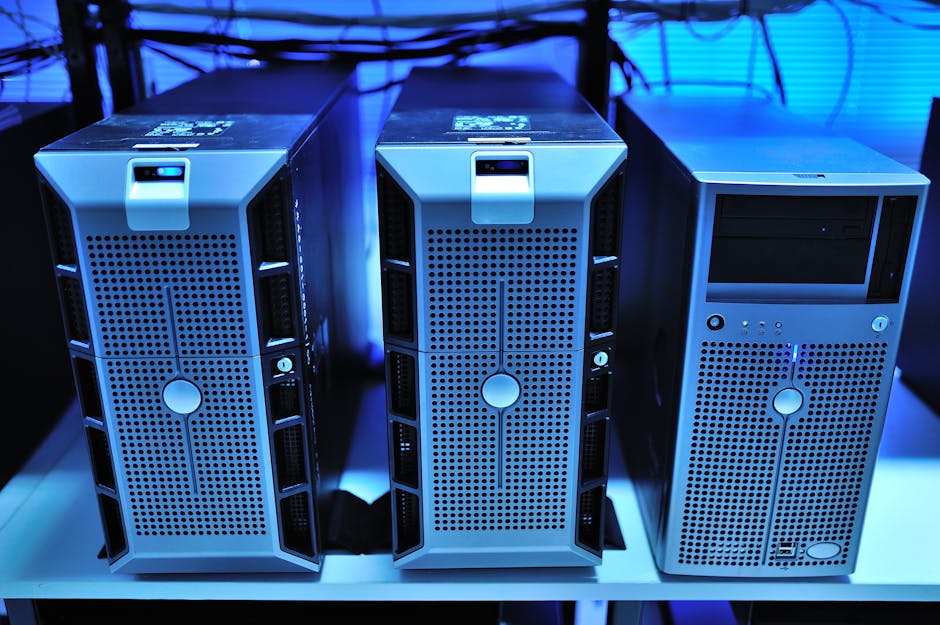
IoT Device Management Platforms
Scaling connected fleets reliably is a growing operational challenge as devices proliferate across industries.

I’ve spent years building backend services and deployment pipelines for connected products. Some of the most painful production incidents were not exotic algorithm failures, but mundane device management issues: a bad firmware rollout that left a subset of sensors stuck in a boot loop, a certificate expiry that quietly broke OTA updates, or a fleet-wide configuration change that took days to roll back because there was no good way to target it. IoT device management platforms exist to keep those scenarios from becoming headlines, and to turn the chaos of thousands or millions of diverse devices into something tractable.
This post is written for developers and curious engineers who want to understand what IoT device management platforms actually do, how they fit into a real architecture, and where the tradeoffs lie. We will cover common concepts, compare with alternative approaches, and look at practical code patterns in Python and JavaScript. There is a small personal experience section and a list of free resources you can use to get started.
Where device management fits today
IoT device management has matured significantly over the last decade. A few platforms dominate the landscape, including AWS IoT Device Management, Azure Device Update and IoT Hub, Google Cloud IoT device management, and open source options like ThingsBoard or OpenRemote. Smaller vendors and telecom providers also offer specialized solutions for constrained networks or industrial settings.
These platforms are used in many real-world projects: smart home products that update firmware automatically, industrial sensors in factories, agricultural telemetry across remote sites, logistics fleets with GPS trackers, and medical devices that need strict compliance. They are typically used by platform teams and embedded engineers who want to decouple application logic from the mechanics of device provisioning, updates, and monitoring. Compared to custom-built solutions, a managed platform reduces the operational burden of device identity, secure communications, and lifecycle automation, but it introduces vendor dependencies and potential cost considerations.
Core concepts and typical capabilities
Most platforms converge on a set of well-known capabilities. The exact names differ, but the intent is the same across vendors.
Device identity and provisioning
Devices need a verifiable identity before they can interact with the cloud. Common approaches are X.509 certificates, pre-shared keys, or TPM-backed keys. Provisioning is the process by which a device first connects and proves its identity. At scale, bulk provisioning and just-in-time registration help avoid manual work.
Secure communication
Transport layer security is non-negotiable. MQTT over TLS or HTTPS are the usual protocols. Some platforms support constrained protocols like CoAP over DTLS for low-power devices. The platform handles the certificate authority and rotation, but you may still be responsible for embedding certificates securely on the device, particularly on microcontrollers.
Device state and shadowing
A device might be offline for hours or days. A device shadow or twin stores the last reported state and the desired state, allowing the cloud to reconcile intentions with reality. This decouples your application logic from the device’s connectivity schedule.
Remote updates
Over-the-air updates are a primary value driver. Firmware updates and configuration updates require staged rollouts, canaries, and health checks to avoid mass breakage. A good platform provides progress tracking and rollback mechanisms.
Monitoring and diagnostics
Telemetry ingestion, logs, and metrics enable dashboards and alerting. Platforms often expose rule engines to trigger actions when certain thresholds are met.
Fine-grained control
Jobs and bulk actions let you target subsets of devices, for example, those running a specific firmware version or located in a particular region. This is essential for operational safety.
Practical architecture and code patterns
Let’s illustrate with a minimal end-to-end pattern. We will simulate a fleet of temperature sensors sending telemetry, reporting state, and handling OTA updates. We’ll use Node.js for the device simulation and Python for the cloud-side control plane, because many teams use JavaScript on embedded gateways and Python for backend orchestration.
Directory structure
A simple project layout helps keep concerns separate.
iot-fleet-demo/
├── device/
│   ├── package.json
│   ├── index.js
│   └── config.json
├── control-plane/
│   ├── requirements.txt
│   ├── main.py
│   └── config.yaml
└── README.md
Device firmware simulation in Node.js
This code represents a minimal device that connects to MQTT, sends telemetry, and listens for update commands. In a real device, you would replace MQTT with your platform’s protocol and manage certificates in secure storage.
// device/index.js
const mqtt = require('mqtt');
const fs = require('fs');
const os = require('os');
const path = require('path');

// Load config (you would inject this securely on real devices)
const config = JSON.parse(fs.readFileSync(path.join(__dirname, 'config.json'), 'utf8'));

const clientId = config.deviceId || `sensor-${os.hostname()}-${process.pid}`;
const topicTelemetry = `devices/${clientId}/telemetry`;
const topicDelta = `devices/${clientId}/delta`; // desired state changes
const topicUpdateStatus = `devices/${clientId}/update/status`;

// Connect with TLS if certificates are provided
const client = mqtt.connect(config.brokerUrl, {
  clientId,
  username: config.username,
  password: config.password,
  ca: config.caPath ? fs.readFileSync(config.caPath) : undefined,
  rejectUnauthorized: true,
  clean: true,
  reconnectPeriod: 5000,
});

let firmwareVersion = config.firmwareVersion || '1.0.0';
let currentTemp = 22.5;

function reportState() {
  const state = {
    reported: { firmwareVersion, temp: currentTemp, uptime: process.uptime() },
    desired: null // omitted; cloud sets desired via delta or shadow
  };
  client.publish(`devices/${clientId}/state`, JSON.stringify(state), { qos: 1 });
}

function sendTelemetry() {
  const payload = {
    deviceId: clientId,
    ts: Date.now(),
    temp: currentTemp + (Math.random() - 0.5), // small noise
    humidity: 40 + Math.random() * 20,
    firmwareVersion
  };
  client.publish(topicTelemetry, JSON.stringify(payload), { qos: 1 }, (err) => {
    if (err) console.error('Telemetry publish error:', err);
  });
}

function handleUpdateCommand(cmd) {
  // Accept a simple command structure: { targetVersion: "1.1.0", url: "https://..." }
  if (!cmd || !cmd.targetVersion) return;
  console.log(`[UPDATE] Starting update to ${cmd.targetVersion} from ${firmwareVersion}`);
  client.publish(topicUpdateStatus, JSON.stringify({ from: firmwareVersion, to: cmd.targetVersion, status: 'started' }), { qos: 1 });

  // Simulate download and reboot delay
  setTimeout(() => {
    firmwareVersion = cmd.targetVersion;
    console.log(`[UPDATE] Completed. Now at version ${firmwareVersion}`);
    client.publish(topicUpdateStatus, JSON.stringify({ from: cmd.from || cmd.targetVersion, to: firmwareVersion, status: 'completed' }), { qos: 1 });
    // In a real device, you would validate integrity and reboot here.
  }, 2000 + Math.random() * 2000);
}

client.on('connect', () => {
  console.log('Connected to broker');
  // Subscribe to delta and update topics
  client.subscribe(topicDelta, { qos: 1 });
  client.subscribe(`devices/${clientId}/update/command`, { qos: 1 });
  reportState();
});

client.on('message', (topic, message) => {
  try {
    const payload = JSON.parse(message.toString());
    if (topic === topicDelta) {
      // Cloud requested a change; apply it and report back
      if (payload.firmwareVersion && payload.firmwareVersion !== firmwareVersion) {
        handleUpdateCommand({ targetVersion: payload.firmwareVersion, from: firmwareVersion });
      }
    }
    if (topic === `devices/${clientId}/update/command`) {
      handleUpdateCommand(payload);
    }
  } catch (e) {
    console.error('Message handling error', e);
  }
});

// Telemetry loop
setInterval(sendTelemetry, 10000);

// State reporting loop
setInterval(reportState, 30000);

// Graceful shutdown
process.on('SIGINT', () => {
  client.end(true, () => {
    console.log('Disconnected');
    process.exit(0);
  });
});
// device/config.json
{
  "brokerUrl": "mqtts://localhost:8883",
  "deviceId": "sensor-demo-001",
  "firmwareVersion": "1.0.0",
  "username": "device-001",
  "password": "device-secret",
  "caPath": "../certs/ca.crt"
}
Control plane in Python
This minimal control plane demonstrates how you might stage an OTA update and monitor progress. A real platform would provide these APIs, but we show the pattern for clarity.
# control-plane/main.py
import json
import time
from typing import Dict, List
import paho.mqtt.client as mqtt

class FleetManager:
    def __init__(self, broker: str, port: int, ca_certs: str):
        self.broker = broker
        self.port = port
        self.ca_certs = ca_certs
        self.client = mqtt.Client(client_id="control-plane", protocol=mqtt.MQTTv311)
        self.client.tls_set(ca_certs=ca_certs)
        self.client.on_connect = self._on_connect
        self.client.on_message = self._on_message
        self.devices: Dict[str, Dict] = {}  # deviceId -> state
        self.pending_updates: Dict[str, str] = {}  # deviceId -> target version

    def _on_connect(self, client, userdata, flags, rc):
        print(f"Control plane connected with code {rc}")
        # Subscribe to telemetry and update status
        client.subscribe("devices/+/telemetry", qos=1)
        client.subscribe("devices/+/state", qos=1)
        client.subscribe("devices/+/update/status", qos=1)

    def _on_message(self, client, userdata, msg):
        topic = msg.topic
        try:
            payload = json.loads(msg.payload.decode())
        except json.JSONDecodeError:
            return

        device_id = topic.split("/")[1]
        if "telemetry" in topic:
            self.devices.setdefault(device_id, {})["telemetry"] = payload
        elif "state" in topic:
            self.devices.setdefault(device_id, {})["state"] = payload
        elif "update/status" in topic:
            self.devices.setdefault(device_id, {})["update_status"] = payload
            print(f"[STATUS] {device_id}: {payload}")

    def connect(self):
        self.client.connect(self.broker, self.port, 60)
        self.client.loop_start()

    def stage_update(self, device_ids: List[str], target_version: str):
        for device_id in device_ids:
            topic = f"devices/{device_id}/delta"
            message = json.dumps({"firmwareVersion": target_version})
            self.client.publish(topic, message, qos=1)
            self.pending_updates[device_id] = target_version
            print(f"[UPDATE] Staged {device_id} -> {target_version}")

    def monitor_progress(self, timeout_seconds: int = 60):
        start = time.time()
        while time.time() - start < timeout_seconds:
            time.sleep(5)
            for device_id, update_target in list(self.pending_updates.items()):
                status = self.devices.get(device_id, {}).get("update_status")
                if status and status.get("status") == "completed" and status.get("to") == update_target:
                    print(f"[COMPLETE] {device_id} reached {update_target}")
                    del self.pending_updates[device_id]
            if not self.pending_updates:
                print("[ALL UPDATES COMPLETE]")
                break

if __name__ == "__main__":
    # Note: provide real certs in production. This is a demo.
    manager = FleetManager("localhost", 8883, "../certs/ca.crt")
    manager.connect()
    # Stage an update for two devices
    manager.stage_update(["sensor-demo-001", "sensor-demo-002"], target_version="1.1.0")
    # Monitor for completion
    manager.monitor_progress(timeout_seconds=120)
Key architectural decisions
- Identity: In production, assign each device a unique certificate signed by your CA. Use device provisioning services to allow just-in-time registration.
- Security: Never hardcode credentials in firmware. Use secure storage and hardware security modules when available. Rotate certificates and keys regularly.
- Reliability: Use QoS 1 for important messages. Design for idempotency; messages can be delivered more than once.
- Observability: Emit structured logs and metrics. Use the platform’s job features to track update progress and failures.
- Staging: Roll out updates in stages by device group or region. Monitor health metrics before proceeding to the next stage.
Strengths, weaknesses, and tradeoffs
A managed platform reduces the surface area of custom code you need to maintain. It also provides a cohesive experience for device identity, secure communication, and lifecycle operations. In regulated industries, the compliance posture of established platforms is often a decisive factor.
However, platforms are not free, and lock-in can be real. If your use case is very simple, a custom MQTT broker plus a small control plane might suffice. On the other hand, as fleets grow, the operational burden of building robust update pipelines and security controls can outstrip the cost of a platform. At scale, the cost shifts from engineering time to platform fees and data transfer, which is often the right tradeoff.
Some platforms excel at specific areas. AWS IoT Device Management, for instance, provides managed firmware update services and fine-grained job targeting (see the AWS IoT Device Management documentation). Azure offers Device Update for IoT Hub, which simplifies staged rollouts and health monitoring. Google Cloud’s device management integrates with Pub/Sub and edge ML services, which is compelling for analytics-heavy workloads. Open source projects like ThingsBoard and OpenRemote offer flexible data models and dashboards but require you to manage hosting, scaling, and security.
A note on protocols and constraints
MQTT over TLS is the most common choice because it handles intermittent connectivity and is well supported across embedded runtimes. CoAP over DTLS is attractive for battery-powered devices on constrained networks, but the ecosystem and platform support vary. HTTP is ubiquitous and simpler for devices that report infrequently, though it is less efficient for high-frequency telemetry.
A common pattern on gateways is to run a local MQTT broker that aggregates child devices. The gateway handles protocol translation and certificate management, shielding the child devices from the complexity of TLS. This architecture is common in industrial sites with many legacy devices.
Personal experience
I learned the importance of device groups and staged rollouts the hard way. Early in a project, we pushed a firmware update to all devices at once. The update introduced a memory leak under a specific condition that only appeared after several hours of uptime. The result was a mass reboot event that spiked support tickets. Since then, I treat device groups as first-class citizens, with a minimum of three stages: canary, staged rollout, and full production. Each stage requires clear success criteria and a rollback plan.
Another lesson concerns state management. Without a device shadow, you often end up with race conditions between desired and reported states. One device might reboot in the middle of a configuration change, leaving it half-configured. Shadows help by persisting desired state and letting the device reconcile on reconnect. This is especially valuable for devices that sleep or lose connectivity.
Certificate management deserves discipline. I have seen production issues caused by intermediate certificate mismatches. Automate certificate provisioning and rotation, and test renewal paths regularly. Consider using hardware security modules or TPMs for high-value devices.
Getting started
If you are new to device management, start with a small proof of concept. The goal is to understand the workflow rather than build a production system.
Recommended tooling
- MQTT broker: EMQX or Mosquitto for local development. Both support TLS and ACLs.
- Certificates: Use OpenSSL to generate a CA and device certificates for testing.
- Language runtimes: Node.js for device simulation and Python for control logic are common and easy to debug.
- Dashboards: Grafana for metrics, ThingsBoard for device-centric dashboards.
Project workflow
- Design device identity: Decide between certificate-based auth and pre-shared keys based on device capabilities and security requirements.
- Simulate devices: Use Node.js or MicroPython to mimic a fleet. Start with one device, then scale to 10–100 to understand load.
- Implement control logic: Stage configuration and firmware updates, monitor progress, and roll back when necessary.
- Harden security: Add TLS, rotate credentials, and restrict topics using ACLs.
- Plan observability: Export metrics for device health and update success rates.
Mental model
Treat each device as a distributed worker with unreliable connectivity. The platform is your coordinator, storing intentions and reconciling state. Jobs and groups are your levers for safe changes. Telemetry is your feedback loop.
Free learning resources
- AWS IoT Device Management documentation: https://docs.aws.amazon.com/iot/latest/developerguide/iot-device-management.html Good overview of fleets, jobs, and update strategies.
- Azure IoT Hub and Device Update: https://learn.microsoft.com/azure/iot-hub/ Practical guidance for device provisioning and staged updates.
- Google Cloud IoT Core documentation (legacy but useful concepts): https://cloud.google.com/iot/docs Concepts around device registries and Pub/Sub integration.
- Eclipse Mosquitto documentation: https://mosquitto.org/documentation/ Essential for local MQTT testing and TLS setup.
- ThingsBoard documentation: https://thingsboard.io/docs/ Open source platform with strong device modeling and dashboards.
- OpenRemote documentation: https://www.openremote.io/documentation/ Focus on orchestration and rules for IoT systems.
- EMQX documentation: https://www.emqx.io/docs/ Scalable MQTT broker for development and production.
Who should use an IoT device management platform, and who might skip it
Use a platform if you expect to manage more than a few dozen devices, if firmware updates are required, or if you operate in regulated environments. The combination of identity, secure communications, and lifecycle tooling is hard to build well and even harder to maintain.
Skip a full platform if your use case is a small, static fleet with infrequent changes and you have strong in-house expertise with MQTT and certificate management. Even in that case, consider a lightweight open source option rather than rolling everything from scratch.
The takeaway is pragmatic. Device management is less about flashy features and more about reducing operational risk. A good platform turns chaotic fleets into manageable systems, and that is where reliability and scalability come from. Start small, learn the workflow, and scale with intent.